The most quietly delivered news in Bordeaux this year may prove the most consequential. Bernard Magrez, one of the region's largest vineyard holders, has named his son Philippe, 63, as his successor. He revealed the decision not in a press release but in conversation, and it took the press two months to catch up with it.
How the news surfaced
Magrez revealed his succession plans on Jane Anson's podcast in February 2026. The news traveled slowly: it surfaced in a Bernard Magrez retrospective in the regional newspaper Sud-Ouest, and the French broadsheet Le Figaro highlighted it before Wine-Searcher reported the story in April 2026. A succession announced on a podcast, confirmed in a retrospective, and only then treated as news is a very Bordeaux way of doing things.
Le Figaro posed the question the whole region is asking: how does a founder step back from a business he has run for some 70 years, a company the paper described as inseparable from its founder? It is the right question, and it has no quick answer. Businesses built over seven decades do not hand over like relay batons; they unwind, carefully, over years.
The slow journey of the news is part of its meaning. A succession revealed in conversation, carried in a retrospective, and only then reported as news suggests a family that wanted the decision understood before it was announced. In a region where successions are often rumored for years before they happen, the quietness of this one is itself a statement.
Forty years in the group
Philippe Magrez, 63, has worked in the group for about 40 years. The succession is therefore less a changing of the guard than a formal recognition of a working reality: the successor has been inside the business for most of his adult life, and the handover ratifies an apprenticeship that began decades ago.
That long apprenticeship is the succession's strongest argument. Family businesses fail in the handover when the heir inherits the title without the knowledge; four decades inside the group is the opposite of that risk. The question is not whether Philippe knows the business but whether the business can imagine itself without its founder, a harder problem that no apprenticeship fully solves.
The estate at the center
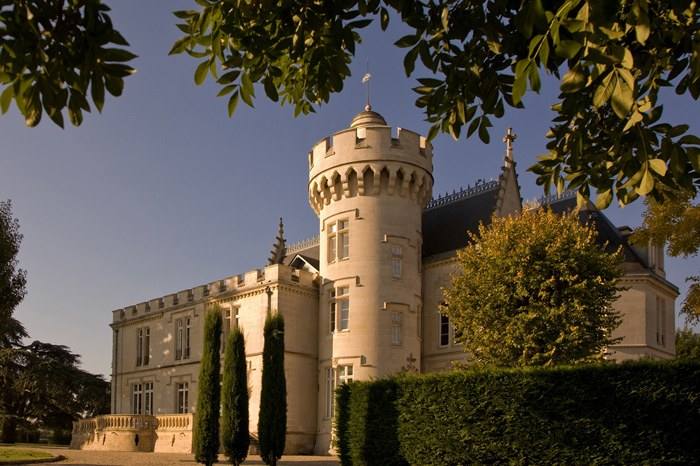
Bernard Magrez owns Chateau Pape-Clement in Pessac-Leognan among numerous Bordeaux estates. Pape-Clement is the best-known address in a portfolio that made its owner one of the region's dominant figures, and the succession puts one of Bordeaux's most visible estates in new hands.
The portfolio is the context in which the succession matters. This is not the handover of a single chateau but of one of Bordeaux's largest vineyard holdings, and the decisions Philippe makes will shape not just Pape-Clement but the group's entire position in the region.
What succession means in Bordeaux
Wine estates are inherited differently from other businesses. The asset is land, the product takes decades to mature, and the brand is the family name. Bordeaux has watched successions go well and badly for centuries, and the pattern is consistent: the ones that work are planned early, executed slowly, and built on the successor's own authority rather than the founder's shadow.
Magrez has chosen the oldest solution in the book: the son who already knows the cellars. Whether the group changes direction under Philippe is the question that will occupy the next decade. That the question is now his to answer is the news, and Bordeaux will be watching the answer vintage by vintage.
The founder's shadow is the real subject of Le Figaro's question. A business run for some 70 years by one person carries his habits in every decision, from the vineyards to the negociants. Philippe's four decades inside the group mean he knows those habits from the inside; the test is whether he can keep what works and change what does not, with the founder still watching.