The comparison surfaced twice, on two continents, within days of the 2025 Beaujolais release. In Tokyo, Sebastien Cargur, the vice chairman of Inter Beaujolais, told an audience on 20 November 2025 that the vintage promised a depth comparable to 2015, calling it a memorable good year for the region's winemakers. In New York the same week, Franck Duboeuf, pouring the new wines at Benoit, reached for the identical year. The 2025 vintage most reminds him of 2015, he said, describing it as well balanced, with silky tannins, no cooked fruit aromas and true Beaujolais character. The two men were describing different tiers of the same harvest, but the message landed identically: 2025 is the vintage Beaujolais has been waiting a decade to repeat.
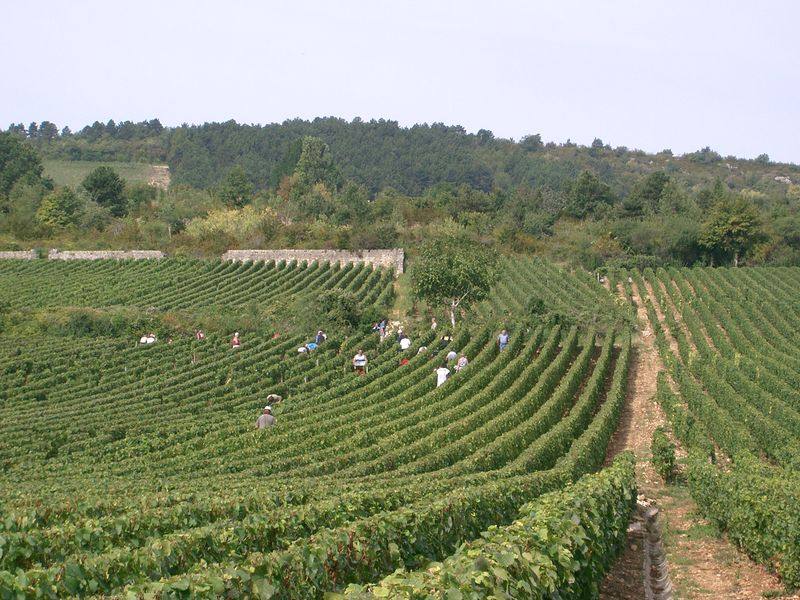
It did not come easily. Inter Beaujolais' official vintage report describes a season of extremes. A spring of good weather gave way to extreme summer heat, so intense that the grapes slowed in maturity, followed by constant swings between sun and rain. A canicule ran without a drop of rain; late-July rains then restored the soils' water reserves in the final straight before picking; August opened with fifteen days of extreme heat that pushed ripening fast. Picking began on 23 August for the whites and 25 August for the reds, among the earliest starts the region has seen, and the harvest split in two: a hot, dry first phase, then an extension to mid-September in cooler, wetter conditions that slowed the pace of ripening and picking.
The berries were small, packed with sugar and moderate in acidity, and the report describes the resulting wines as colored, elegant and powerful, shaped by carefully managed extraction in the cellar. Veraison arrived as early as the Fete Nationale, 14 July, on the most precocious parcels, and the rains and lower temperatures before the harvest, the report says, refined the vintage's balances toward a fine quality potential. The growers, it concludes, once again showed adaptation and resilience.
It was not an easy year in terms of process, but we're happy with it in terms of the quality of the wine.
Franck Duboeuf, speaking to the Beverage Information Group in New York, November 2025
Duboeuf was candid about the cost of that quality. The harvest, he said, was about half its usual size, and the season's inconsistency made life hard in the vineyard. Such swings between sun and rain, he said, make planning difficult and are very stressful for the growers. The trade is watching the same arithmetic: Laithwaites' buyer for Beaujolais and the Rhone, Mark, summed up his 2025 notes in two words, reporting simply that Beaujolais looks great.
Why the crus won the split
The two-phase harvest is the technical story behind the 2015 comparison. The August heat built concentration into small, thick-skinned berries, while the cool September second phase preserved balance and let growers pick parcel by parcel instead of racing the weather. That is the profile the crus need: depth without heaviness. Duboeuf's own tasting notes point the same way, with balance and silky tannins rather than the cooked fruit that hot years can impose on Gamay.
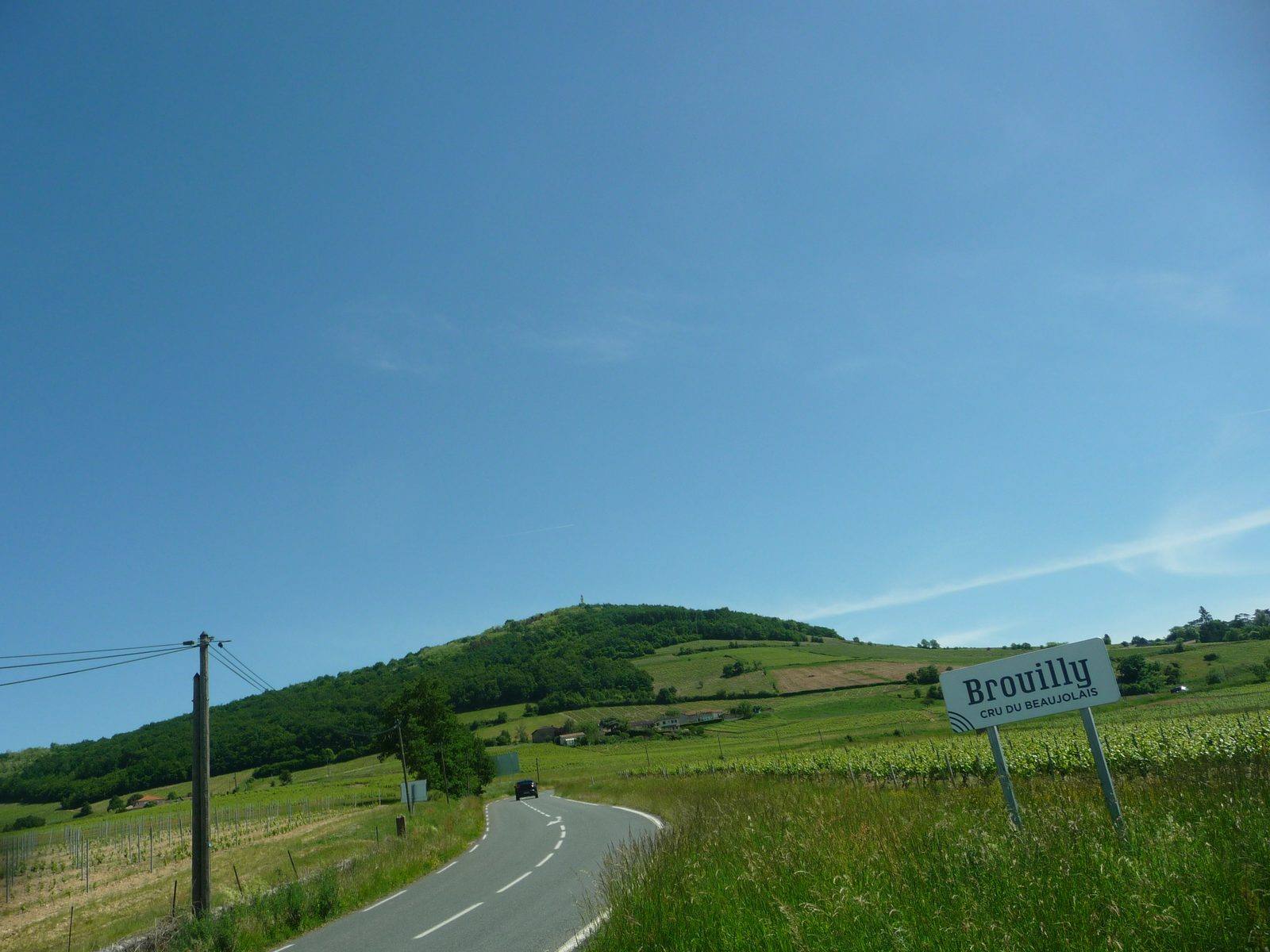
Scarcity will be the vintage's other signature. A harvest at roughly half its normal volume, spread across the region's twelve appellations, means the cru wines, Morgon, Moulin-a-Vent, Fleurie, Brouilly and their neighbours, will be thinly allocated. For collectors, the signal from both Tokyo and New York is that the shortage is matched by substance.
Beyond the crus: the white wine plan
The 2025 report arrives as Inter Beaujolais pursues its most ambitious strategic shift in years. The region's new director general, Olivier Badoureaux, told the drinks business in April 2025 that Beaujolais intends to raise white wine from 4 percent of production to 12 percent, declaring: "Our ambition is to grow from 4% white to 12% in five-to-six years." The whites, largely Chardonnay, are a historic part of the region, included in the 1936 appellation rules but long kept for local drinking. The stronghold is the Pierres Dorees in the south, where clay and limestone suit Chardonnay, and part of the increase will come from Chardonnay already planted in Beaujolais but currently shipped north and bottled as Bourgogne Blanc or Cremant.
The numbers explain the urgency. In 2023, just 363 hectares of whites produced 2.3 million bottles, against more than 3,000 hectares of Gamay producing 19.8 million bottles. Beaujolais is 94 percent red in a world drinking less red wine, and Badoureaux noted that every key French player has dropped in exports except Bourgogne. The UK, the region's second biggest export market after the US at three million bottles in 2023 against America's 5.3 million, is a particular target for the crisp, fresh style.
Jean Bourjade of Inter Beaujolais offered the wider perspective in an AFP interview: Beaujolais represents only 0.3 percent of the world's vineyard land, yet it is one of the most famous wines on earth, thanks to Beaujolais Nouveau, which he called the tree that hides the forest. Nouveau now accounts for about a third of the region's wine, less than half its 1990s peak, as growers have reorganised around quality. The crus are the forest. Sheri Morano, a master of wine, put the case for cellaring them plainly: "The cru Beaujolais can last, if they last in your cellar. They're so good and yummy. I have trouble keeping them around." The 2025s, small in volume and large in promise, will test that patience.
| Date | Event |
|---|---|
| 23 August 2025 | Harvest begins for Beaujolais whites |
| 25 August 2025 | Harvest begins for the reds |
| Mid-September 2025 | Final parcels picked in cooler conditions |
| 20 November 2025 | Beaujolais Nouveau Day; 2025s presented in Tokyo and New York |