In the second week of September 2026, as the last grapes of the earliest harvest in Champagne's recorded history came in, the region's authorities quietly did something they had never done before. They granted a temporary derogation allowing Champagnes from the 2026 harvest to reach 15 percent alcohol, including wines that had been chaptalised. Under the normal rules, an enriched Champagne must not exceed 13 percent total alcohol after its second fermentation in bottle. The 2026 fruit made that ceiling look optimistic.
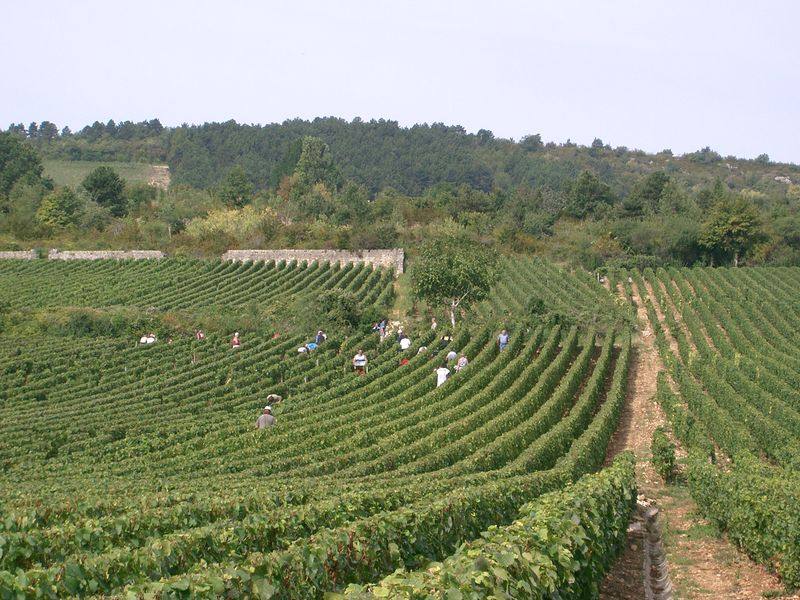
The season that produced it was, in the Comite Champagne's own word, unprecedented. Severe spring frosts cut the crop. Flowering came exceptionally early. Then five heatwaves rolled across the summer. The first grapes were picked on 6 August, picking became widespread from 17 August, roughly two weeks earlier than in 2025. The agronomic yield, what growers actually brought in, averaged around 7,000 kilograms per hectare across the appellation, against about 9,900 in 2025. Less fruit, more sun, almost no rain since the start of June: the berries that remained were unusually concentrated in sugar.
The alcohol problem
In Champagne, sugar is destiny, because sugar becomes alcohol. The Comite Champagne has said average potential alcohol across the appellation remains below 12 percent. But averages conceal the parcels, and some parcels tested above 13 percent potential alcohol. For a region whose identity rests on freshness, high acidity and relatively modest alcohol, that is not a winemaking preference. It is a regulatory event.
Hence the derogation. It is expected to apply to only a small number of producers, and it does not mean Champagne as a whole is moving toward 15 percent. But the symbolism is hard to miss: the cool-climate region has been given temporary room to make wines at strengths associated with much warmer parts of France. The measure covers even chaptalised wines, the category the 13 percent ceiling was designed to restrain.
What the low yields did
The paradox of 2026 is that the small crop made the sugar problem worse and the quality story better. With so little fruit on the vines, what remained ripened fast and far: sugars concentrated, but so, unusually, did acids and flavour, because the heat arrived on vines that still held water in the chalk and could shut down through the hottest hours and recover at night. Growers across the appellation reported the same combination Champagne rarely sees, extreme ripeness with freshness intact, in a harvest that ran its course in days rather than weeks.
A vintage with famous company
The Comite Champagne said in September that the 2026 vintage has the potential to produce "very great wines", and it has compared the balance of the emerging wines with 1921, 1947 and 1959, three of the warmest and most mythologised vintages of the last century. It is early for such company, and the Comite itself cautions that definitive judgement must wait. But the comparison is deliberate: 2026 belongs, climatically, with the heat years, and the question is whether it belongs with them in quality too.
The honest answer, for now, is that the raw material looks exceptional and the winemaking looks difficult. High alcohol can unbalance a Champagne and, at the extreme, make it harder for yeasts to finish fermentation. Across the appellation, the Comite puts the average potential alcohol below 12 percent, and only a small number of parcels ran past 13. The challenge now moves to the cellar: turning sweet fruit into sparkling wine that still tastes like Champagne.
Restraint, four years running
Set against the drama in the vineyard, the region's market management has been conspicuously calm. In July, growers and houses meeting at the Comite Champagne's headquarters in Epernay set the 2026 marketable yield at 8,800 kg/ha, the equivalent of about 252 million bottles. It was the fourth consecutive annual reduction, following 9,000 kg/ha in 2025. The stated aims: to rebalance stocks gradually, preserve the vineyards' economic viability and hold quality standards.
The backdrop is a market finding its floor. By June 2026, Champagne shipments reached 107.1 million bottles, up 1.2 percent, driven by exports while the French domestic market ran a little slower, the Comite reported in its decision statement. Maxime Toubart, president of the growers' union SGV and co-president of the Comite Champagne, called the yield a measured decision, mindful of both the reality of the vineyards and the future of the industry. His counterpart for the houses, David Chatillon of the Union des Maisons de Champagne, presented it in the same statement as the region's collective model adapting to market realities while keeping the long-term value of the appellation front and centre.
That model, unique to Champagne, is the quiet engine of the story. Every July the region decides how much of its crop may be sold as Champagne, tuning supply to demand rather than to the weather. In 2026 the weather gave less than the marketable limit anyway. The agronomic yield of 7,000 kg/ha came in below the 8,800 the region had authorised, which means the restraint was imposed by the season, not the committee.
What 2026 asks of the future
The region is already thinking past the vintage. Growers are weighing varieties and practices built for a cooler era against seasons that now arrive earlier and hotter: later-ripening fruit, canopy choices that shade the bunches, and Champagne's rarer historic varieties, some of which hold their acidity deep into a hot summer. The irony is neat: varieties the region nearly forgot may become relevant precisely because the climate is changing.
That is the larger story of 2026. Champagne spent decades learning to ripen grapes in a cool northern climate. Now it must learn to keep freshness as harvests move earlier and musts arrive sweeter. The 15 percent derogation is the regulatory framework catching up with the vineyard, one unprecedented season at a time. Whether 2026 joins 1921, 1947 and 1959 in the pantheon will take years to know. That the question is being asked at all, after the earliest harvest on record, is the news.